mit
-
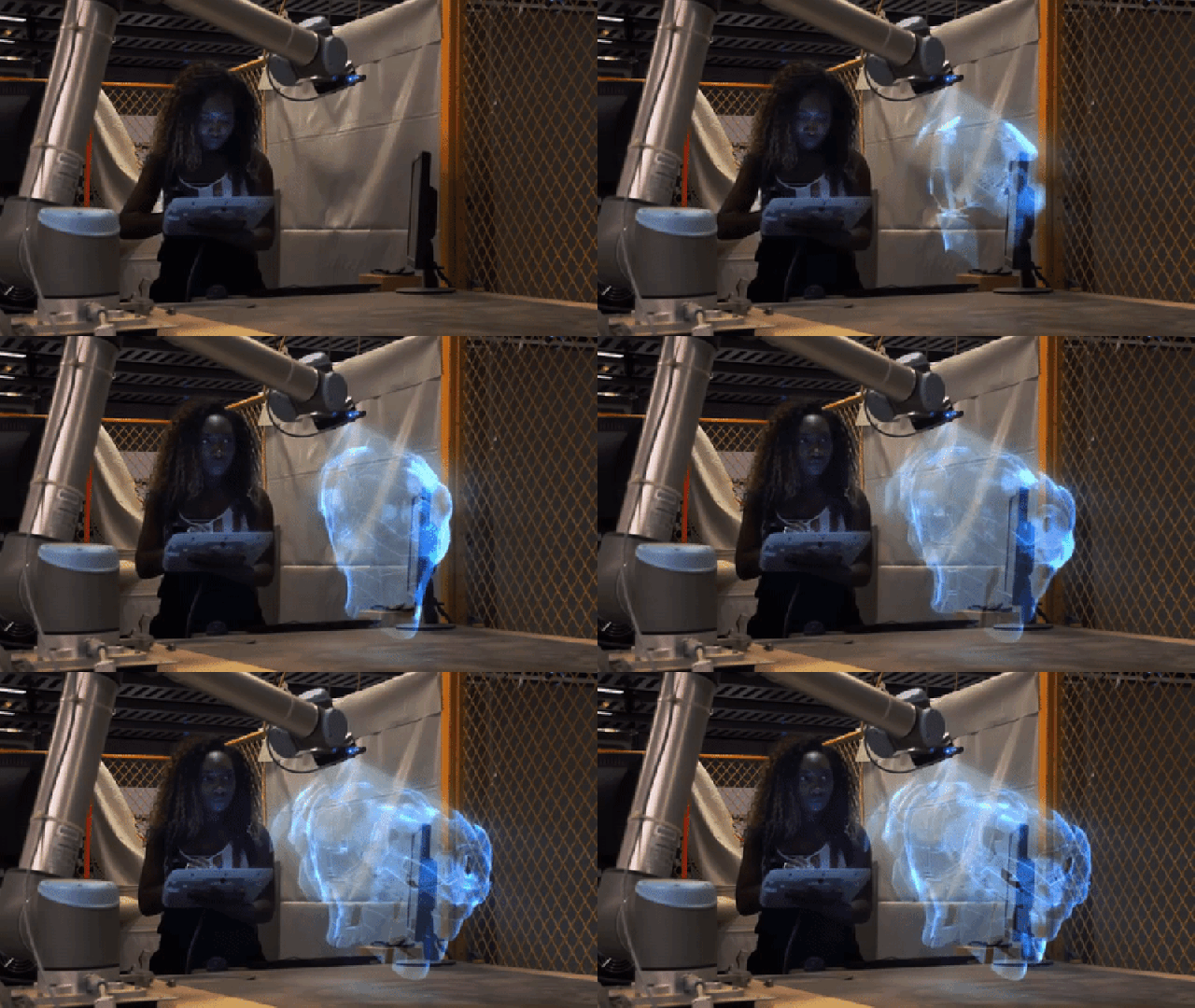
MIT Students Have Made An Awesome Fan Film About Riri Williams, The New Iron Man

Iron Man’s replacement in Marvel’s current comics, Riri Williams, was an MIT student before she started flying high as the Invincible Ironheart. So it’s pretty damn awesome that a group of her real-life alumni have made their own fan film about the young hero and her life at the university.
-

Get Your Open Source OpenRelativity Engine From MIT

MIT’s OpenRelativity engine, designed to model Einstein’s special theory of relativity in a video game, now is being released as an open-source toolset.
-
EA Sports Drafts Two From MIT, Colorado State
Four months ago, EA Sports opened up applications for a four-month fellowship meant to invite former college athletes into video game design careers. Today, the label awarded its first two, to graduates who played football at Colorado State University and the Massachusetts Institute of Technology.
-
Is This Studying Hate Speech, Or Just Intellectualized Trolling?
GAMBIT, the video games research centre at MIT, is investigating racism and hate speech in online multiplayer gaming. The results are not particularly surprising, but I’ll confess to a morbid curiosity as to what a gamer would hear playing Halo: Reach under the gamertag PROUD_2B_MUSLIM, GayPride90 or Black_N_Proud90. It, and the language in this video,…