

An older parent says the trip to the GP is harder than the illness. Their daughter rearranges work, organises transport and keeps track of the medication list, all for an appointment that may last only a short time. It's a familiar strain for people living with frailty, disability or chronic illness, and for the carers who help them get through the day.
Home-based primary care can bring ongoing medical care to a patient's home, but the name covers services that work in different ways. Some provide continuing GP care; others are hospital-led treatment for an acute illness. The distinction matters when you're asking who is responsible, what's funded and what happens if symptoms worsen.
A useful guide needs to be candid, not just celebrate the convenience. The practical questions are how care works in the home, who can realistically access it, and what to check about cost, safety and the workload that may fall to family members.
Table of Contents
- When the Waiting Room Becomes the Hardest Part
- What Home-Based Primary Care Actually Means
- How Big Home-Based Care Has Become in Australia
- Primary Care at Home Compared with Other Home Services
- How Life Primary Care Can Help
- Who Benefits and Where the Evidence Stands
- The Access Gap Most Articles Skip Over
- How to Explore Access and Costs in Australia
- Key Takeaways for Patients, Carers and GPs
When the Waiting Room Becomes the Hardest Part
For the daughter in that opening scene, the appointment is not just a slot in the calendar. It means arranging transport, helping her parent get ready, and working out whether the journey is manageable that day. A home visit might remove the travel, but it doesn't automatically solve every problem. The clinician still needs a safe way to assess the patient, coordinate with other providers and respond if the person's condition changes.
That's why it helps to ask what a service offers before treating “care at home” as a single option. Ongoing home-based primary care is different from a one-off GP house call, a virtual appointment or a hospital team delivering acute treatment at home. Each model has a different purpose, and the person or team responsible for follow-up may differ too.
This guide focuses on three practical questions:
- How does it work? What changes when primary care moves from a clinic into someone's home?
- Who may be eligible? How do health needs, location, technology and the available workforce affect access?
- What should patients and carers check? Who pays, who coordinates care, and what's the plan if the patient gets worse?
The Australian system includes established home-based services, but availability isn't the same everywhere. Some care is delivered through primary care; Hospital in the Home is organised through hospital services. Understanding that boundary can help a family ask the right questions, avoid assuming a particular service is available, and make a more informed decision with the patient's usual GP.
What Home-Based Primary Care Actually Means
Start with the familiar version of primary care: a patient books an appointment, travels to a clinic, and discusses symptoms, medication or ongoing health needs with a clinician. Home-based primary care keeps the relationship and much of the work, but changes the setting. The clinician visits the patient where they live, which can make assessment and follow-up more practical for someone who struggles to get to a clinic.
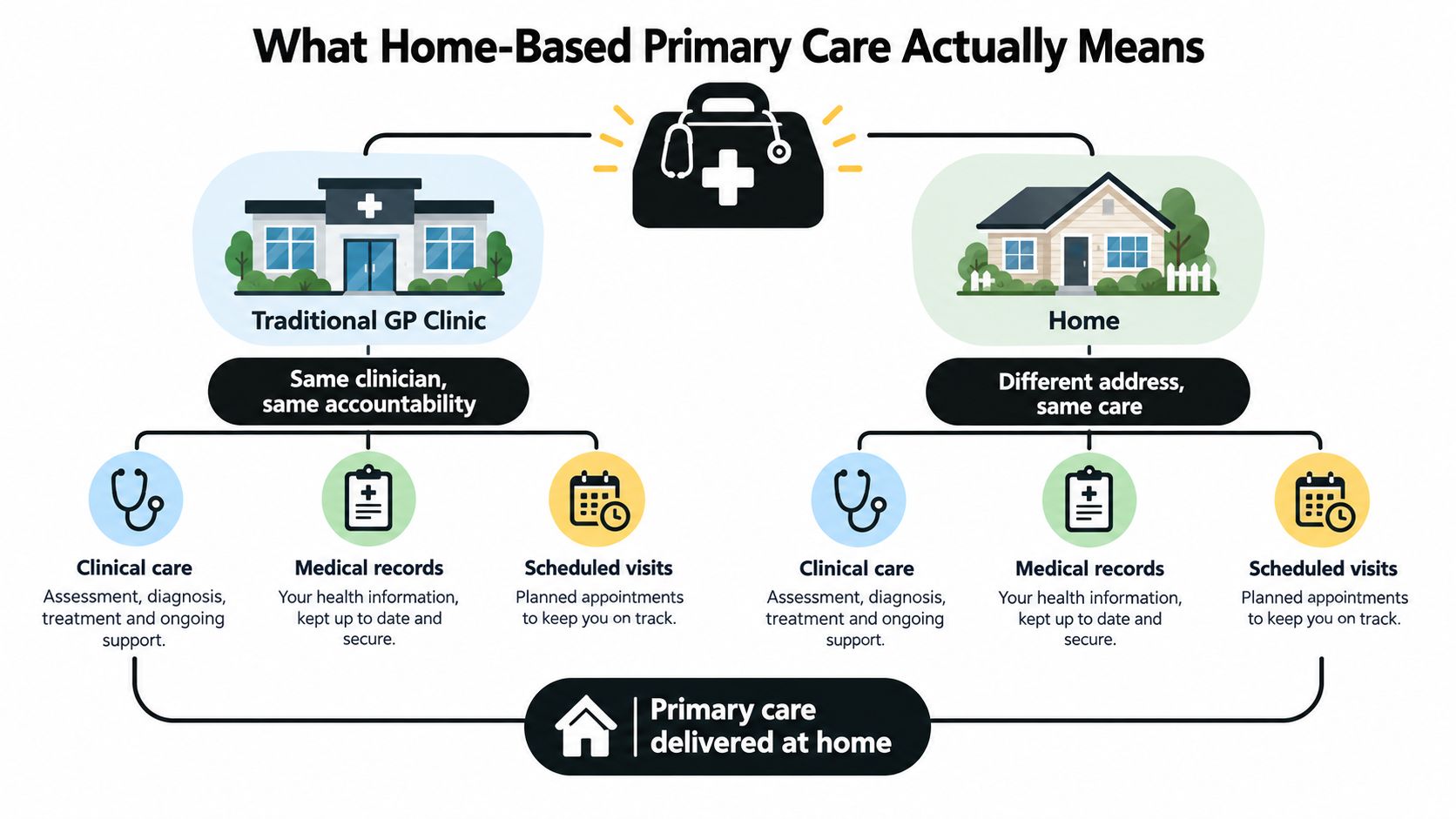
The living room becomes the consultation space, but the aim remains primary care: assessing health concerns, planning treatment and keeping care connected over time. Depending on the local service, a GP may work with practice nurses, pharmacists, allied health professionals or other providers. The team might review medicines, manage a chronic condition, arrange preventive checks or discuss a care plan. The exact mix depends on what the service can provide.
The difference between a visit and a continuing service
A one-off house call can address a problem on a particular day. It doesn't necessarily mean the patient has an ongoing home-based primary-care relationship. After-hours services and community nursing also have their own roles. A nurse may visit to provide a specific treatment, for example, without taking responsibility for the person's broader primary care.
Think of it as the same kind of clinical conversation in a different room, with the important qualification that the service must explain how records, prescriptions, referrals and follow-up are handled. A clinician seeing the patient at home can also notice practical details, such as whether medicines are organised or whether mobility around the home is difficult. That context may help inform care, but it doesn't replace the need for appropriate clinical assessment.
Home-based primary care also isn't another name for Hospital in the Home. That service is hospital-led and can involve acute treatment at home for someone who remains formally admitted. The boundary is important: ask who is providing the care, what they're responsible for, and whether the patient is being treated as a hospital inpatient or through primary care.
How Big Home-Based Care Has Become in Australia
Australia has experience with home-based acute treatment through Hospital in the Home (HIH), a model that provides hospital-level care in a patient's residence rather than a hospital ward. Its modern development in Australia dates to 1994, when it began receiving funding closer to hospital care than ordinary community care, according to a 2020 analysis of HIH activity in major Australian hospitals.
The scale of that activity helps show that hospital care at home isn't an experimental idea. The analysis examined 2,185,421 admissions across 19 major hospitals between 2011 and 2017. Of those, 80,167 admissions included HIH care, or 3.7%. HIH admissions increased at an average rate of 3.1% per quarter, compared with 1.6% per quarter for total admissions.
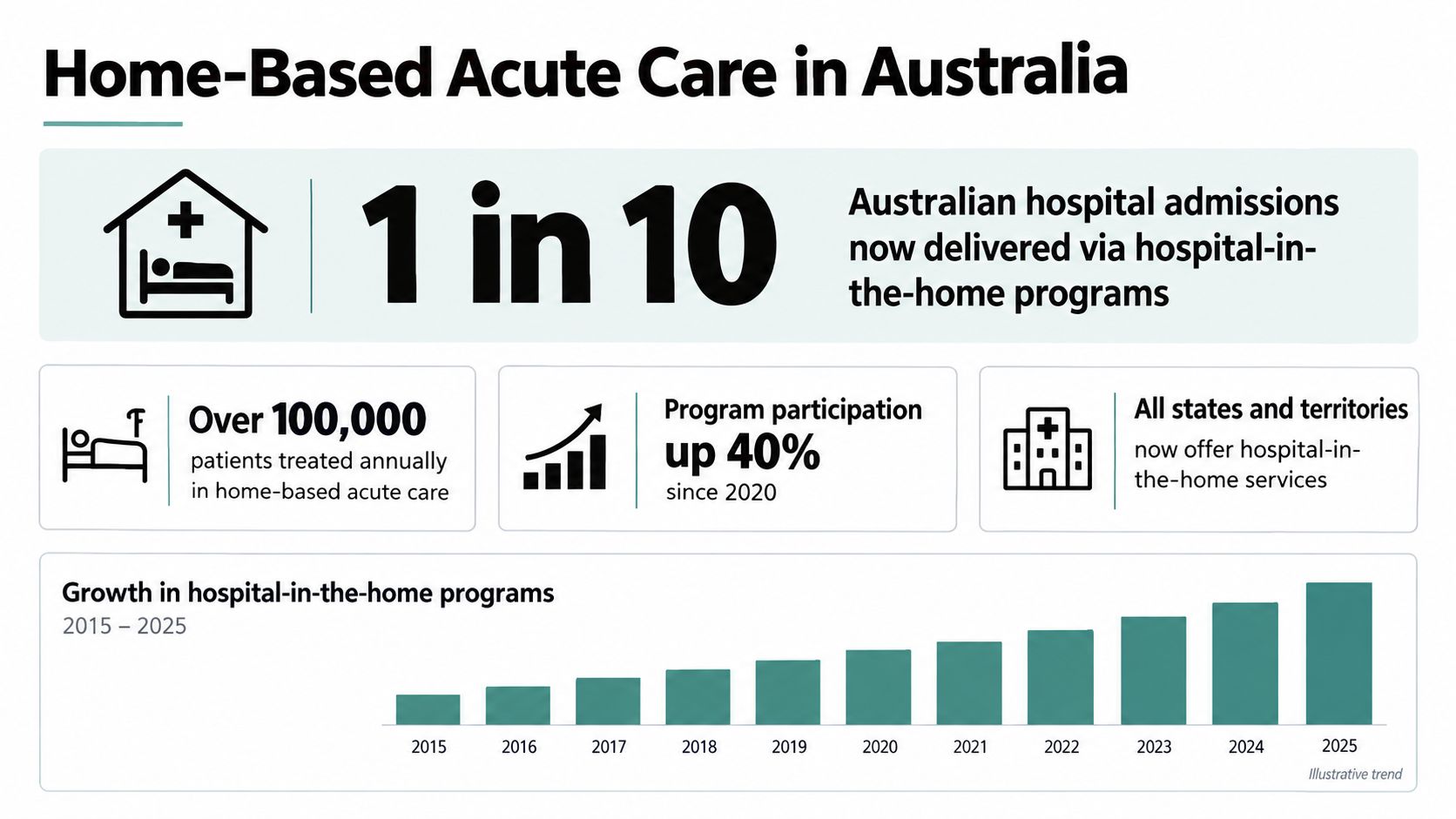
Those figures describe HIH, not all forms of home-based primary care. The typical HIH episode was also not just a brief check after discharge. The median length of stay for admissions involving HIH was 7.3 days, compared with 2.7 days for admissions involving inpatient care only. The analysis noted that HIH patients were selected in part because they were expected to need prolonged treatment. In Victoria, HIH made up approximately 5% of inpatient activity during the period studied.
A separate nationwide snapshot found HIH programs across every state and territory, but also a marked difference by hospital type. Researchers identified services in 164 of 643 public hospitals, while 30 of 31 principal referral hospitals had HIH, compared with 27 of 144 public acute Group C hospitals, according to the national survey of Australian HIH services. The gap matters for patients outside large referral centres: a service may exist nationally without being available locally. Before making plans around care at home, ask the local health service what it can provide.
Primary Care at Home Compared with Other Home Services
Several services can involve a clinician contacting or visiting a patient at home. That shared feature doesn't make them interchangeable. The lead clinician, purpose, funding route and escalation plan can all differ, so ask the service to name exactly what it is providing.
| Service | Lead clinician | Typical patient | Funding | Escalation path |
|---|---|---|---|---|
| Home-based primary care | Usually a GP, potentially working with a broader care team | Someone needing continuing primary care who has difficulty attending a clinic | Depends on the provider and applicable Medicare arrangements; confirm fees and eligibility | Agreed plan through the primary-care team, with urgent hospital care when needed |
| Hospital in the Home | Hospital clinical team | A patient needing hospital-level treatment at home | Organised through the relevant hospital service; confirm local arrangements | Hospital team directs escalation, including transfer to hospital when required |
| Telehealth | GP or other clinician providing a remote consultation | Someone whose concern can be assessed remotely and whose circumstances allow it | Depends on current eligibility and billing arrangements; check before booking | Clinician advises on follow-up or in-person assessment |
| Traditional GP house call | Visiting GP | Someone who needs a home visit for a particular appointment or problem | Depends on the practice and billing; ask about any fee | GP advises on next steps or urgent assessment |
A pensioner with several ongoing conditions might use home-based primary care for regular reviews, medicine discussions and coordination. The key question is whether the service provides continuing primary care or only a visit for one concern.
A person recovering from surgery may instead be eligible for Hospital in the Home if a hospital team decides acute treatment can safely be delivered at home. That patient may remain formally admitted, with the hospital responsible for the treatment plan. It's not the same as arranging an ordinary GP house call.
Even a video appointment is a different kind of service, not a substitute for every home visit. If you're comparing online support options for another need, the online counselling guide is an example of a separate service category. For medical care, ask the provider to explain who is clinically accountable, how it's funded and what happens if a remote assessment isn't enough.
How Life Primary Care Can Help
Life Primary Care is a US-based house-call primary-care practice serving northern and central New Jersey, not an Australian service. Its model is useful as an example of what a dedicated home-based practice can include: clinicians deliver care in the patient's home, while a coordination office handles scheduling, insurance checks and follow-up. The practice says it serves Morris, Essex, Union, Somerset, Passaic and Bergen counties, and that patient care takes place at home.
Its services cover routine primary care, chronic disease management, wellness visits, medication reviews, post-hospital follow-up, geriatric and dementia care, palliative care, non-emergency urgent visits, in-home tests and telehealth follow-ups. For someone who has difficulty travelling because of mobility limits, oxygen use or transport barriers, a home visit can put the assessment in the setting where medicines are taken and day-to-day needs arise.
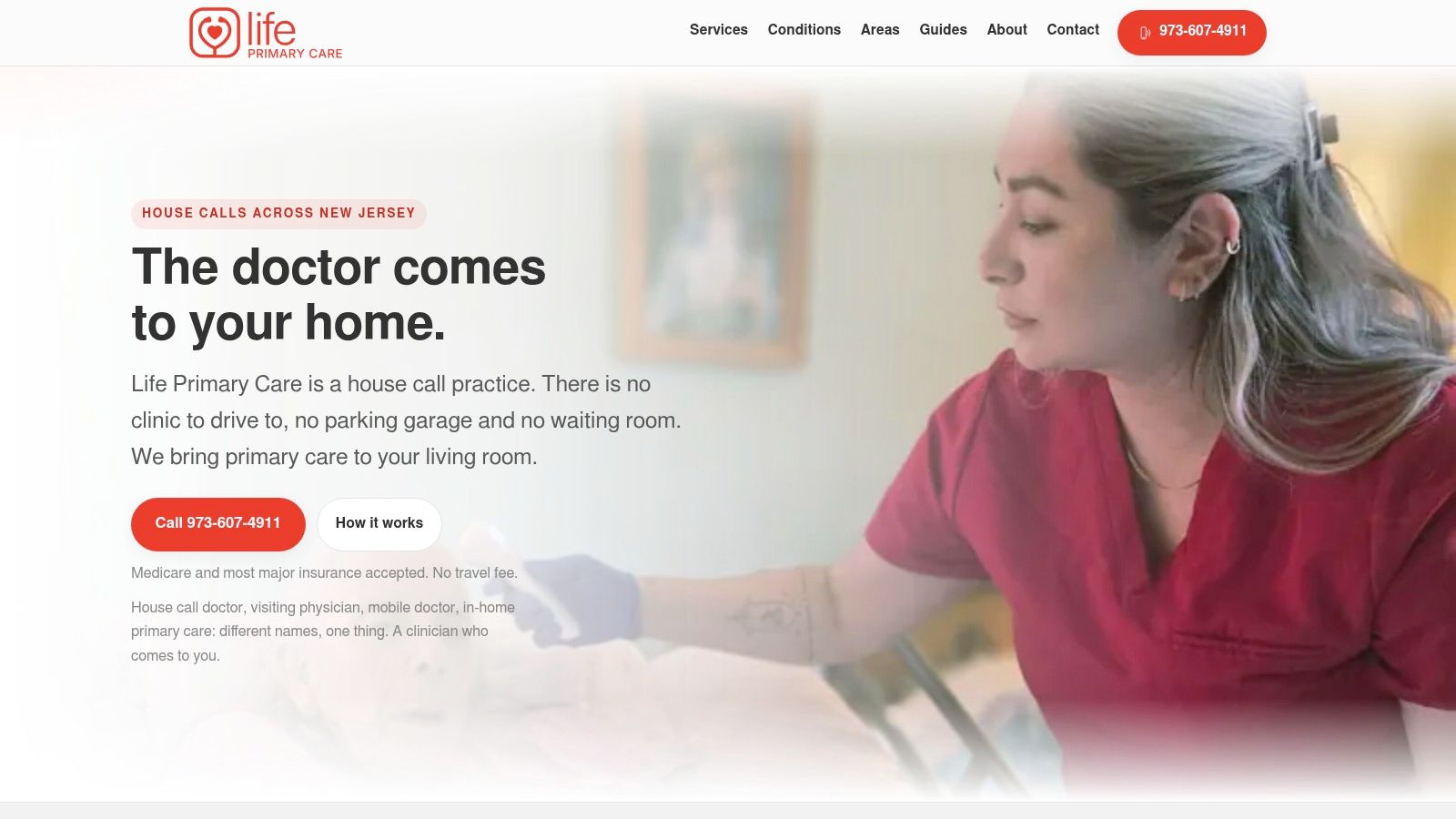
The practice describes longer visits that allow clinicians to review the home environment and medication bottles, and says it coordinates with hospitals and specialists rather than belonging to a hospital system. Those features can address common practical problems, such as confusion after discharge or a medication list assembled by several prescribers. They don't establish that the same service or payment arrangement exists in Australia.
Readers assessing the model can review Life Primary Care's description of its home-based primary care services, then use the example to frame questions for Australian providers. Who arranges follow-up? Can the clinician coordinate with the patient's usual GP and pharmacy? What is covered by Medicare, what attracts an out-of-pocket charge, and what happens outside scheduled visits?
Australian outcome evidence also gives patients a useful standard for asking whether a program is working. A review of local data describes lower costs in a matched Victorian study when hospital admission was avoided, but cautions that models and evidence vary. A sound service should be able to explain how it monitors safety, escalation, patient experience and total episode cost, rather than presenting home visits alone as proof of value.
Who Benefits and Where the Evidence Stands
Home care can be a good fit when the patient's clinical needs, home environment and available team match. Australian data show why outcomes should be judged carefully rather than assumed: in a Victorian matched study, 924 home-treated patients and hospital controls were compared, and costs were 38% lower when hospital admission was completely avoided, as described in an Australian review of HITH evidence and outcomes. That result relates to the study setting and comparison. It isn't a promise that every home-based service will cost less or suit every patient.
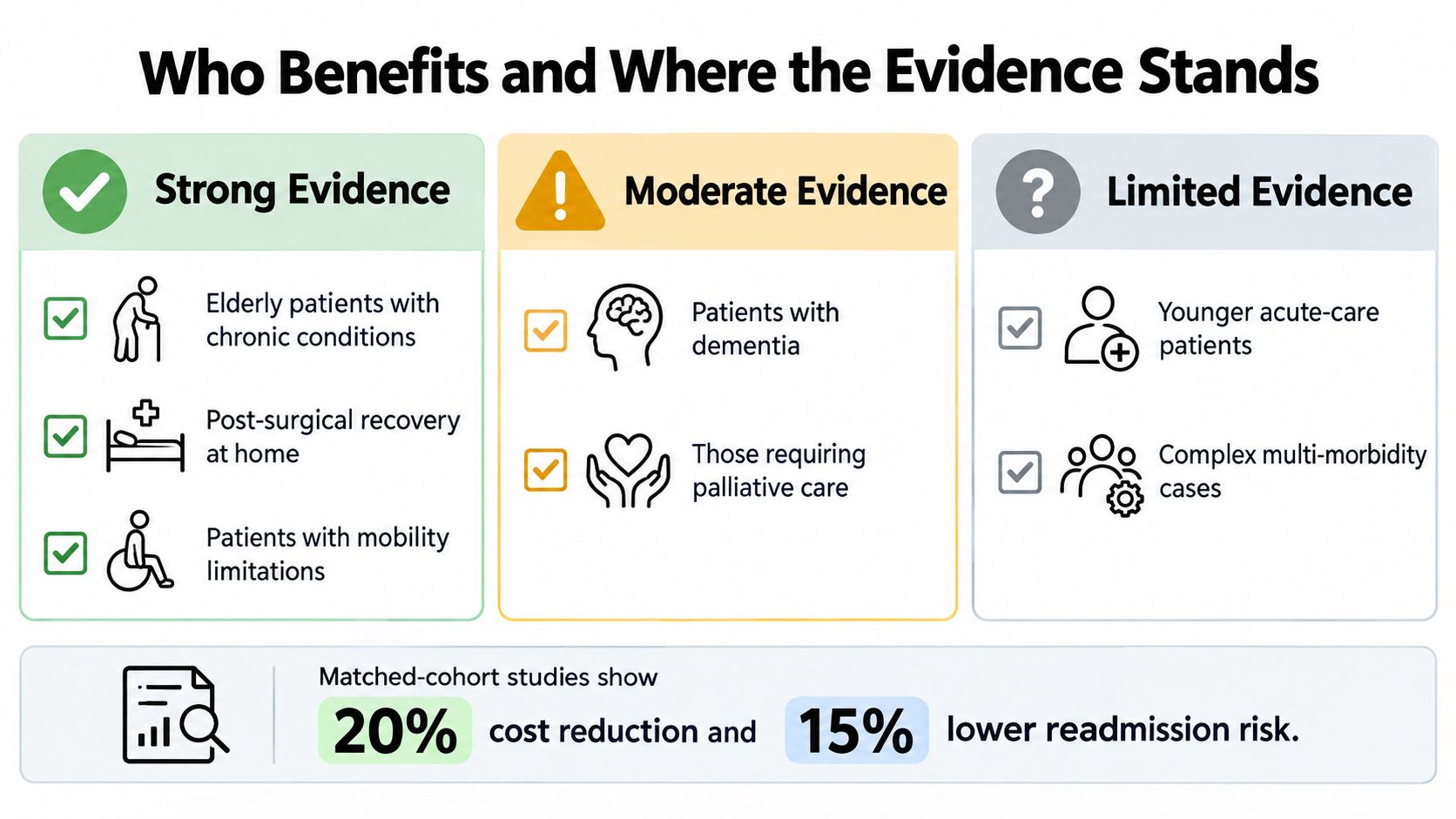
The same review describes gaps in the evidence, including uncertainty about which patients benefit most and limited evidence for some older populations. It also notes that Australian services vary. A patient's eligibility on paper won't necessarily mean the service is available, suitable or equally accessible in practice.
Ask for the measures, not just the promise: A service should be able to explain how it tracks safety, outcomes and the work expected from patients and carers.
Useful measures to discuss include:
- Avoided admissions: Does the program record when it safely replaces a hospital stay?
- Escalation and readmission: How does it track unplanned transfers or a return to hospital?
- Safety and experience: Does it monitor mortality, treatment failure, and patient and carer feedback?
- Time and cost: Does it measure time spent at home and the total cost of an episode, not just the number of visits?
The home itself can also become part of the care plan. A carer may need to help monitor symptoms, organise medicines or be present for visits. Equipment can bring practical demands, including space, electricity and, in some homes, changes to make care safer. Before agreeing, ask which tasks the clinical team will perform and which it expects the patient or family to take on. Home care should not transfer an unmanageable workload to a carer.
The Access Gap Most Articles Skip Over
Care delivered at home isn't automatically easier to reach. Digital tools can support consultations and follow-up, but they depend on reliable internet, suitable devices, digital skills, privacy and help when technology fails. If a patient can't use a video platform or doesn't have a quiet space for a call, a virtual-first service may create another barrier instead of removing one.
The RACGP's discussion of digital health inequity in Australian primary care cites an Australian Digital Inclusion Index finding that 20.6% of Australians were digitally excluded or highly excluded. It also points to more pronounced gaps for Aboriginal and Torres Strait Islander people, people in rural and remote communities, and people with disability. Those circumstances can overlap with the very reasons someone may find clinic attendance difficult.
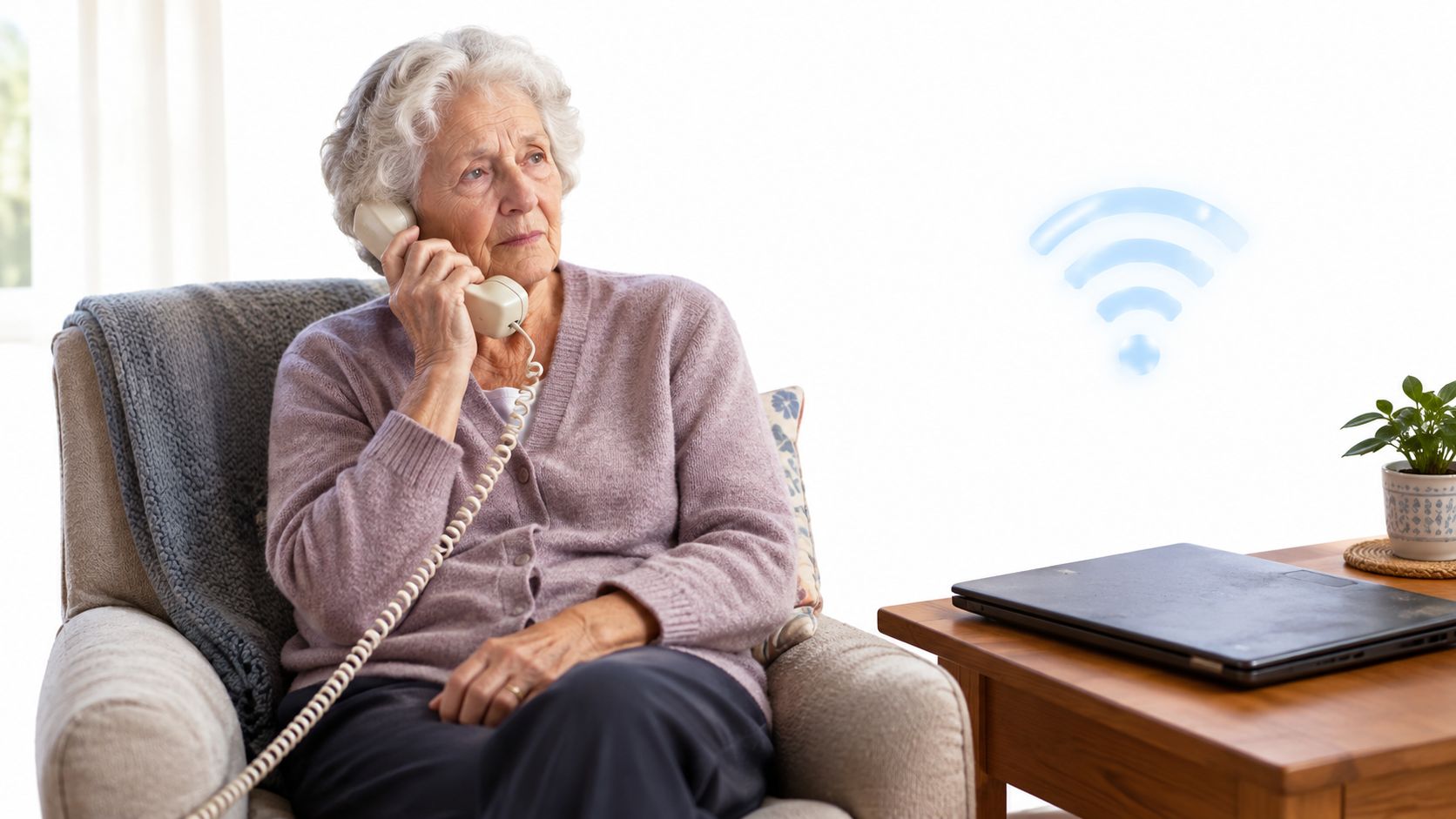
Before signing up for a service that relies on video, remote monitoring or electronic messages, ask how it will work in your home:
- If video fails, can the clinician switch to a phone call or arrange an in-person assessment?
- For equipment, who supplies and pays for monitoring devices, data or technical support?
- For privacy, can the patient speak freely at home, and what alternatives are available if they can't?
- For carers, is a family member expected to manage devices or send readings?
Digital access is only one part of the equation. Geography, local staffing and the availability of an in-person option also matter. A sensible service plan includes alternatives for people who can't reliably connect or use a device, rather than treating digital participation as a condition for receiving care.
How to Explore Access and Costs in Australia
Start with the GP who already knows the patient, if they have one. Explain what makes clinic attendance difficult and ask whether the practice offers home visits, ongoing home-based primary care or referrals to another local service. If the need is acute hospital-level treatment, ask whether the treating hospital has a Hospital in the Home pathway. The service name matters because it points to different clinical responsibilities.
Before booking, confirm the payment arrangements directly. Ask whether the appointment is bulk billed, whether there's an out-of-pocket fee, and whether travel, equipment or follow-up costs are charged separately. Don't assume that Medicare, private health insurance or an aged-care arrangement will cover every part of a service. For telehealth, ask the provider to confirm current eligibility and billing rules for the specific appointment rather than relying on general advice.
A practical first conversation can be brief:
- Describe the obstacle. Is travel difficult because of mobility, illness, transport or caring arrangements?
- Name the care needed. Is it ongoing primary care, one house call, remote advice or hospital-level treatment at home?
- Check the team. Who will see the patient, coordinate prescriptions and communicate with the regular GP or pharmacy?
- Ask about the bill. What is covered, and what could cost extra?
- Agree on escalation. Who should the patient call after hours, and what symptoms mean calling an ambulance?
The provider should also explain how it works with local hospitals and community services. If the patient's needs include infant feeding support alongside other care, a separate service such as a lactation consultant may be relevant, but it doesn't replace medical assessment or an agreed clinical escalation plan.
Key Takeaways for Patients, Carers and GPs
Home-based primary care is an established way to bring ongoing primary care into a patient's home, but it isn't one uniform product. It's also not the same as Hospital in the Home. A visiting GP, a telehealth clinician, a community nurse and a hospital team may all be involved in care at home, but they don't automatically share the same role or accountability.
For patients and carers, three checks make the conversation clearer:
- Clarify the service. Ask whether it's continuing primary care, a one-off home visit, virtual care or a hospital-led program.
- Confirm responsibility. Find out who follows up results, manages medicines and responds if the patient gets worse, including outside scheduled visits.
- Check what the home can support. Discuss internet access, privacy, equipment and the time or tasks expected from family members.
For GPs, the practical challenge is coordination. Patients need to understand who holds the care plan, how information reaches the usual practice and when a referral or hospital assessment is needed. Families need a clear route for asking questions, not just a schedule of visits.
Home-based care is most useful when it strengthens a continuing clinical relationship and fits the patient's circumstances. Moving a consultation from a clinic to a living room doesn't, by itself, guarantee access, safety or continuity. Ask specific questions before agreeing, and make sure the patient and carer understand what the service will do and what it won't.
If you've used home-based care as a patient, carer or clinician, share what worked and what was difficult in the comments on The Kotaku Times. A practical account can help other Australian readers prepare for their own conversation with a GP or local health service.
Talk with the patient's usual GP or local health service and ask what home-based options are available, who is clinically responsible, and what the full cost and escalation plan will be.